Introduction

A mesmerizing celestial spectacle known as the “Blood Moon” graces the night sky during a total lunar eclipse. The name, “Blood Moon,” derives from the captivating hue it casts upon our lunar companion. This extraordinary event transmutes the moon into a mesmerizing shade of red or reddish-brown, hence its moniker – the blood moon. Often, this crimson radiance earns it another affectionate title – the “red moon.”

Upcoming Blood Moons

Regrettably, 2023 and 2024 will not treat us to the mesmerizing sight of a Blood Moon. Our next rendezvous with this celestial wonder awaits us in 2025, specifically on March 14. Another opportunity will present itself later that year, on September 07, though it will remain concealed from view in the Americas.

In the year 2026, we anticipate yet another occurrence on March 03, while the subsequent lunar spectacle graces the night skies on New Year’s Eve, December 31, 2028. This upcoming display promises to etch itself into our memories.

Unveiling the Nature of the Blood Moon

But what precisely is a Blood Moon?

A total lunar eclipse, at times affectionately referred to as a Blood Moon, manifests its reddish charm when the Full Moon succumbs entirely to Earth’s shadow. This term also occasionally describes the occurrence of four consecutive total lunar eclipses.

The Enigma of the Crimson Hue

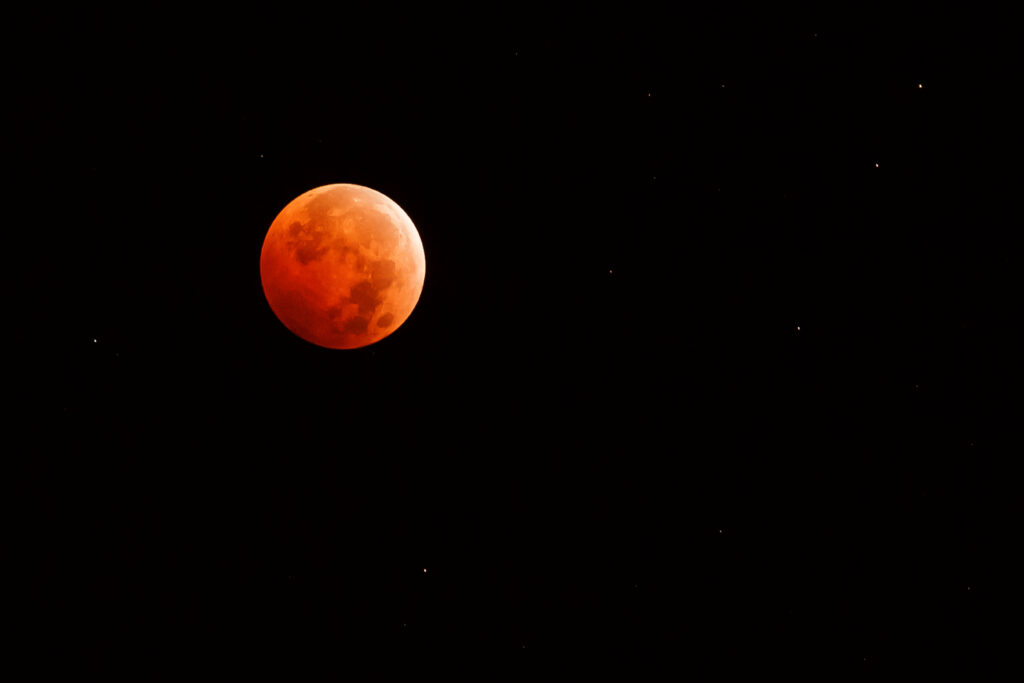
While the term “Blood Moon” may not find its roots in scientific nomenclature, it has gained prominence in recent times, particularly when alluding to a total lunar eclipse. During such an eclipse, the fully shrouded Moon assumes a reddish tint, as beautifully depicted in the image captured during the total lunar eclipse of October 2014.

The question that lingers is: Why does the Moon adorn itself in this splendid shade of red?

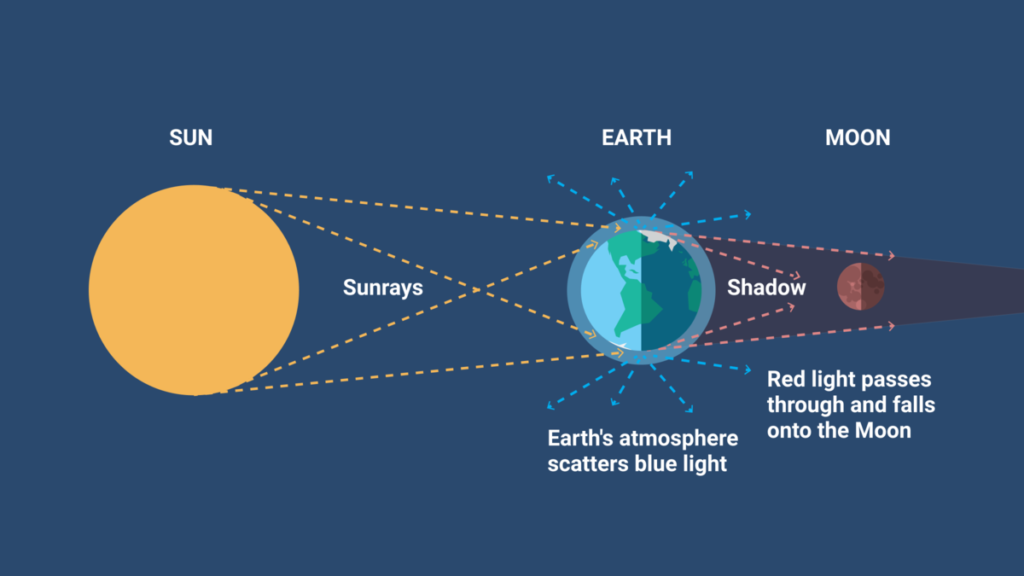
A total lunar eclipse materializes when the Moon traverses the Earth’s umbral region, blocking all direct sunlight from gracing its surface. However, a fraction of sunlight still finds its way to the lunar terrain indirectly, courtesy of the Earth’s atmosphere, casting the Moon in a warm reddish, yellow, or orange luminescence.

Blood Moon – Total eclipse Photographed on May 15th, 2022 at 9:04 pm
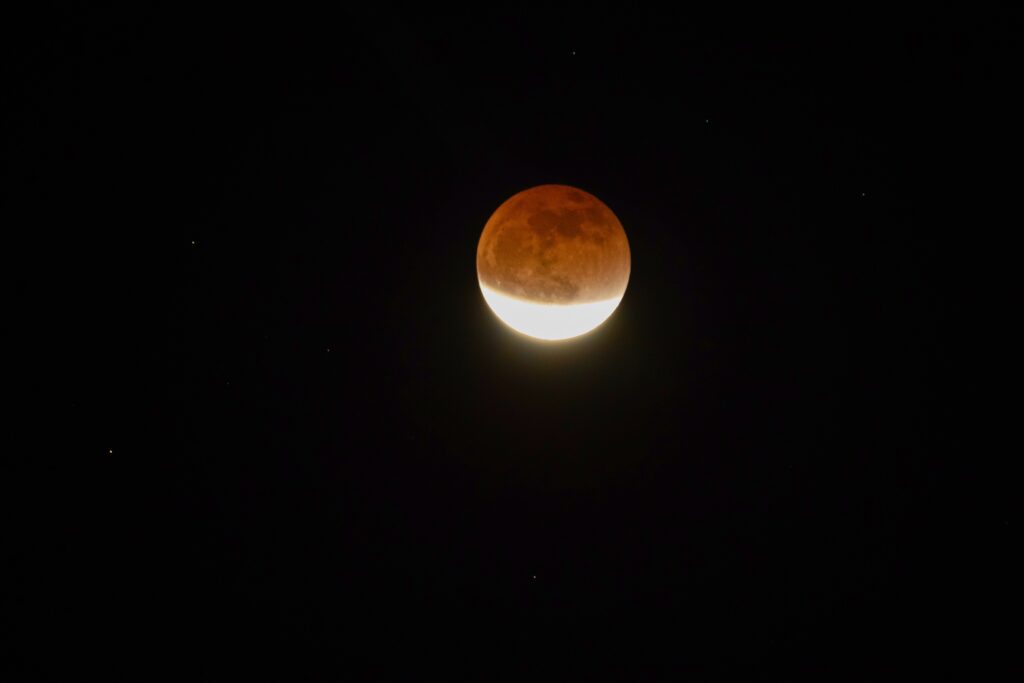
Partial eclipse at 10:08 pm

As the Sun’s rays venture through the Earth’s atmosphere, the phenomenon of Rayleigh scattering filters out certain colors from the light spectrum, particularly those tilting towards the violet end. This very mechanism is responsible for the captivating palette of colors witnessed during breathtaking sunrises and sunsets. Remarkably, the longer red wavelengths endure this effect to a greater degree, and as a result, the light gracing the Moon’s surface acquires a distinct reddish tint, transmuting the fully eclipsed Moon into the bewitching red celestial spectacle we lovingly call the Blood Moon.

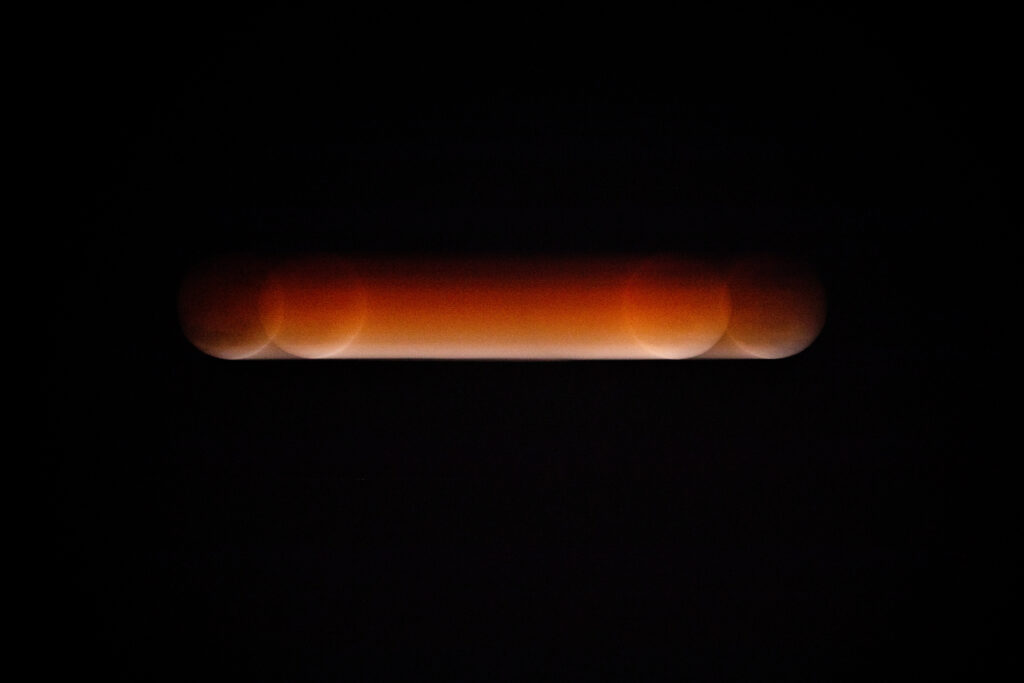
I experimented with a few long exposure photos; for this one, I kept the shutter open for a second and a half while panning the camera from side to side.